
This is the second feature in Apollo SDA’s ongoing ‘Beyond the Build’ series.
Across Australia, thousands of people with disability still live in ’Legacy’ or ’Basic-funded SDA homes that once met their needs but no longer reflect how they want or deserve to live.
These homes predate the current SDA Design Standard and were carried into the NDIS at its commencement. Many participants have lived in the same property for decades, without a meaningful opportunity to reassess their needs or explore housing that could offer greater independence, safety and choice.
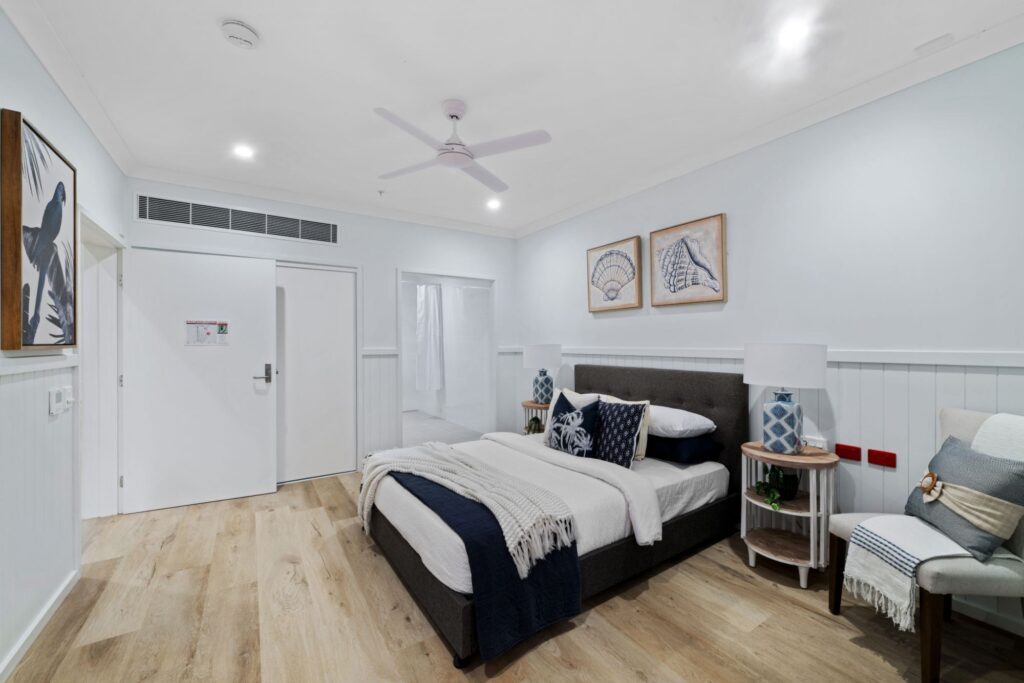
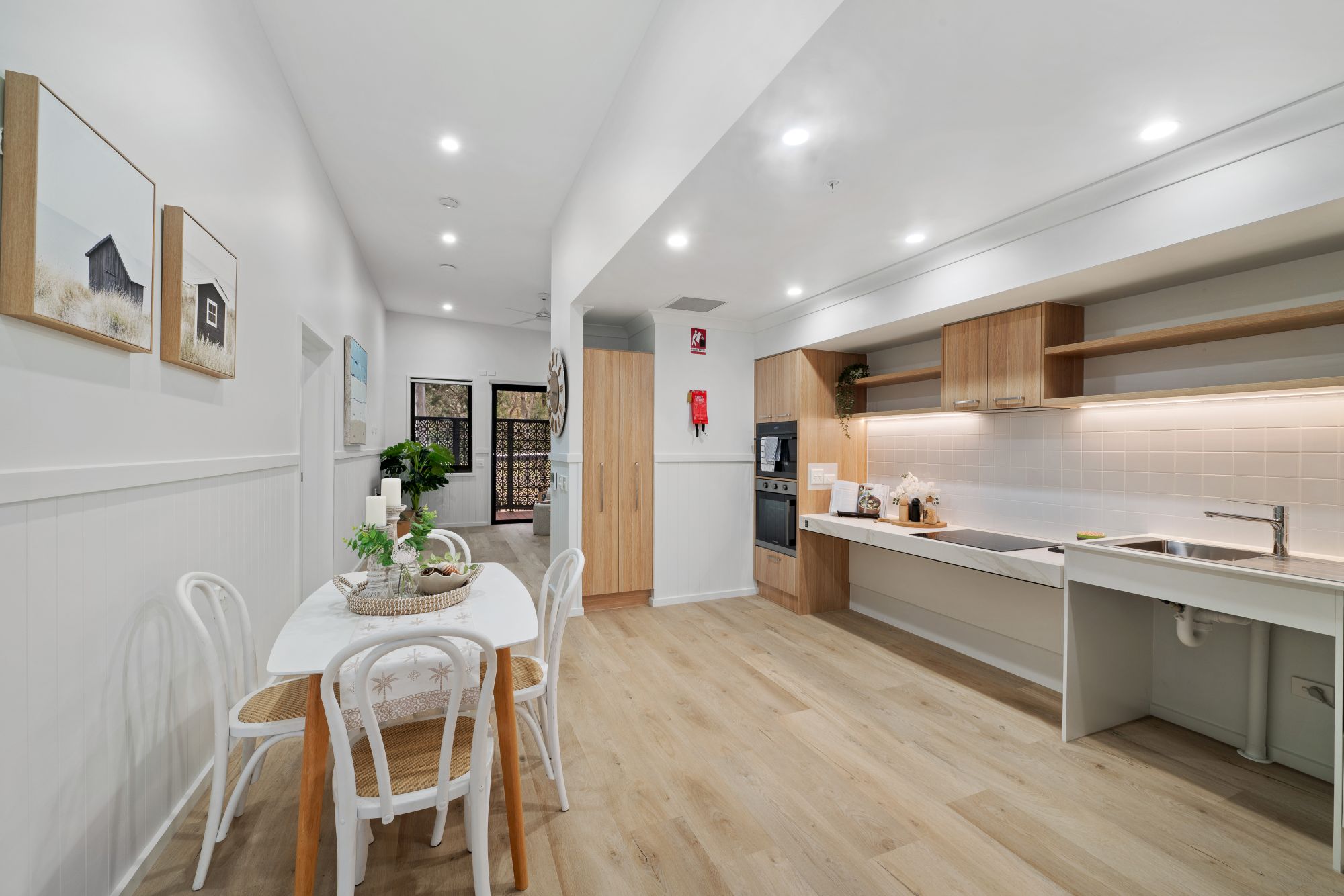
Apollo’s recently completed Modular home in Bellara, QLD.
Ageing Homes, Growing Needs
Legacy homes house six or more residents in shared settings with on-site staff. Basic-funded dwellings may have only minor modifications and fall short of modern accessibility and energy-efficiency standards.
As participants age, support needs increase but their housing has not evolved with them. Participants and their families or support network are left uncertain about what comes next.
No Clear Transition Pathway
While the NDIS provides a defined (though complex) process for new SDA eligibility, there is no consistent national pathway for people already living in legacy or basic SDA to transition into more appropriate SDA housing.
There is currently no clear framework for:
- Moving from legacy or basic SDA and transitional funding for a new design category
- Reassessing eligibility when needs change
- Ensuring continuity of housing during transition
Participants and providers are often left navigating lengthy, case-by-case reviews.
The NDIA is not completely silent on this issue. A subsection of the SDA Rules (S13(1)(a)) states that a participant may have very high support needs if they have lived in specialist disability accommodation for extended periods and that experience has impacted their capacity to transition to alternative living arrangements and supports. However, evidencing this is complex and requires strong advocacy and deep sector expertise.
The Human Cost
For many participants, their legacy house is the only home they have ever known. Friendships have formed, routines are established, and staff relationships often feel familial.
Change can feel overwhelming, particularly for ageing parents, and it’s important not to assume that transitioning to a new home will automatically feel comfortable or straightforward for everyone.
Transition requires more than new bricks and mortar. It requires deliberate trust-building, risk mitigation, and most importantly, security of tenure. After decades in one home, certainty matters as much as design.
Relationships between co-residents further complicate transition. In many settings, bonds have become quasi-familial; in others, residents are ready for change. Some wish to move together. Others prefer individual pathways. SIL providers frequently act as the bridge of trust in these emotionally complex decisions.
Rethinking the Approach
Currently, reassessment is largely treated as an individual process. For this unique cohort, that may be insufficient.
Where appropriate, participants may be considered both individually and collectively. When thoughtfully approached, group-based transition planning can reflect existing relationships and living arrangements, while still safeguarding each person’s individual goals, choice and control. It is not a one-size-fits-all solution, but one option that may suit some cohorts when guided by participant preference and informed consent.

Looking Ahead
To move from uncertainty to empowerment, the sector needs:
- A nationally consistent framework for transitioning from legacy and basic SDA
- Recognition of this cohort as a distinct group with shared transition risks
- Flexible pathways allowing individual or collective moves
- Priority access to modern SDA with genuine security of tenure
- Strong partnerships between providers, SILs and investors to preserve trusted relationships while delivering fit-for-purpose housing
Without a clear pathway, people remain in homes that no longer meet their needs. With the right framework, transition can become an opportunity and not a risk.
Learn more about Apollo SDA and our participant-led approach at www.apollosda.com.au or contact our team on 1300 937 279 or admin@apollosda.com.au
Read the first blog ‘The Forgotten Few, Part 1′ here.